
Mitigation of Impacts to Fish and Wildlife Habitat: Estimating Costs and Identifying Opportunities
Date Released
October 2007
Every year, human activities cause significant harm to fish and wildlife habitat and the environment. Many of the impacts to these natural resources are never addressed. In certain cases, however, federal, state, and local laws and programs can require monetary or in-kind compensation for these impacts. A new ELI report, "Mitigation of Impacts to Fish and Wildlife Habitat: Estimating Costs and Identifying Opportunities," estimates that private and public expenditures for such compensation under key federal programs total up to $3.8 billion annually.
Conserving Treasured Landscapes in the Chesapeake: Appendix
Date Released
November 2009
ELI has collaborated with the Friends of the Capt. John Smith Chesapeake Trail, and the National Geographic Society to produce this appendix, along with the special report and map that recommend the development of a bold and coordinated strategy for conserving the Chesapeake’s treasured landscapes and calling for more federal investment in land conservation.
Effects of Climate Change on Aquatic Invasive Species and Implications for Management and Research
Date Released
February 2008
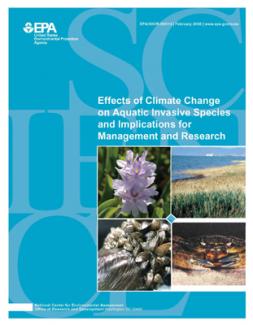
This ELI-authored EPA report considers the interactions of climate change and aquatic invasive species (AIS). It analyzes the existing scientific literature on the effects climate change will have on AIS and considers provisions for adaptation to changing conditions in existing state AIS management plans. Based on this analysis, ELI offers five recommendations for states to maintain and improve state AIS management programs and activities in a changing climate.
Stakeholder Forum on Federal Wetlands Mitigation
Date Released
April 2002
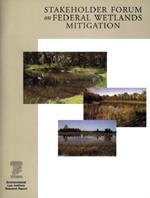
On October 1-2, 2001, a Mitigation Stakeholders Forum was held at the National Aquarium in Baltimore. The U.S. Environmental Protection Agency, Maryland Department of the Environment, and the National Aquarium in Baltimore sponsored the event. The forum brought together a diverse group of individuals from federal and state government, non-profit environmental organizations, third party mitigation providers, and others (e.g., academia, home builders, representatives of the oil and gas industry, non-governmental organizations, etc.).
Conserving Treasured Landscapes in the Chesapeake: A Special Report
Date Released
November 2009
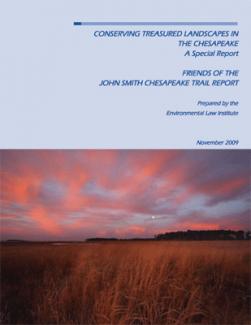
ELI has collaborated with the Friends of the Capt. John Smith Chesapeake Trail, and the National Geographic Society to produce this special report, along with an appendix and map, recommending the development of a bold and coordinated strategy for conserving the Chesapeake’s treasured landscapes and calling for more federal investment in land conservation.
The Role of Aquatic Invasive Species in State Listing of Impaired Waters and the TMDL Program: Seven Case Studies
Date Released
May 2008
ELI’s report, The Role of Aquatic Invasive Species in State Listing of Impaired Waters and the TMDL Program, examines how seven states representing a range of geography, number of aquatic invasive species, water quality standards, 303(d) listings for invasive species, and aquatic invasive species management programs have addressed the effects of aquatic invasive species on the waters of their respective states through the federal Clean Water Act.