
Vibrant Environment
All
All | Biodiversity | Climate Change and Sustainability | Environmental Justice | Governance and Rule of Law | Land Use and Natural Resources | Oceans and Coasts | Pollution Control
By Sierra Killian, By Rebecca L. Kihslinger
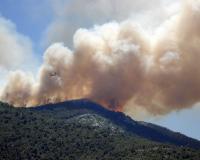
Lasting repercussions of the 2018 fire season have continued to vex California’s electric utility sector, the state government, and communities across the state that are recovering from previous fires and bracing for the next wave of wildfires.
PG&E, the bankrupt private electric utility whose aging infrastructure has been linked to 19 major wildfires in 2017 and 2018, has faced withering coverage in the press, intense scrutiny by state officials, and public questioning in federal court. Earlier this month, the Wall Street Journal reported that PG&E has repeatedly delayed updates to its transmission lines and towers, many of which are still in operation well beyond their life expectancy.
By Sierra Killian, By Rebecca L. Kihslinger
Lasting repercussions of the 2018 fire season have continued to vex California’s electric utility sector, the state government, and communities across the state that are recovering from previous fires and bracing for the next wave of wildfires.
PG&E, the bankrupt private electric utility whose aging infrastructure has been linked to 19 major wildfires in 2017 and 2018, has faced withering coverage in the press, intense scrutiny by state officials, and public questioning in federal court. Earlier this month, the Wall Street Journal reported that PG&E has repeatedly delayed updates to its transmission lines and towers, many of which are still in operation well beyond their life expectancy.
By Anthony D'Souza
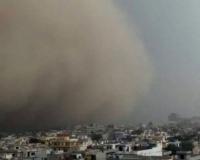
Much of the media concerning climate change have direly emphasized that its most horrendous effects will be borne by some of the world’s most impoverished developing cities, with coastal settlements on the front lines of this siege. Yet, most of these headline-grabbing pieces rarely explore the true complexity of these issues beyond mere sea-level rise and a few other similarly visible or tangible environmental problems. This blog aims to briefly outline the deeper extent of crises threatening these cities by further examining an experience of one particular city. A city where the ravages of global warming are more than just dire warnings—but a clear and present burden on its overwhelmingly underprivileged citizens every day. A city that offers perhaps one of the most holistic case studies to examine the entangled causality between environmental and social issues wrought by climate change. My hometown, Karachi, Pakistan.
By Anthony D'Souza
Much of the media concerning climate change have direly emphasized that its most horrendous effects will be borne by some of the world’s most impoverished developing cities, with coastal settlements on the front lines of this siege. Yet, most of these headline-grabbing pieces rarely explore the true complexity of these issues beyond mere sea-level rise and a few other similarly visible or tangible environmental problems. This blog aims to briefly outline the deeper extent of crises threatening these cities by further examining an experience of one particular city. A city where the ravages of global warming are more than just dire warnings—but a clear and present burden on its overwhelmingly underprivileged citizens every day. A city that offers perhaps one of the most holistic case studies to examine the entangled causality between environmental and social issues wrought by climate change. My hometown, Karachi, Pakistan.
By Anthony D'Souza
Much of the media concerning climate change have direly emphasized that its most horrendous effects will be borne by some of the world’s most impoverished developing cities, with coastal settlements on the front lines of this siege. Yet, most of these headline-grabbing pieces rarely explore the true complexity of these issues beyond mere sea-level rise and a few other similarly visible or tangible environmental problems. This blog aims to briefly outline the deeper extent of crises threatening these cities by further examining an experience of one particular city. A city where the ravages of global warming are more than just dire warnings—but a clear and present burden on its overwhelmingly underprivileged citizens every day. A city that offers perhaps one of the most holistic case studies to examine the entangled causality between environmental and social issues wrought by climate change. My hometown, Karachi, Pakistan.
By Taylor Lilley, By Lovinia Reynolds
In honor of the Environmental Law Institute’s 50th Anniversary Year, each month of 2019 highlights a different key theme that represents an important aspect of our work. July is focused on environmental justice, a movement and a concept that encompasses efforts to highlight the disproportionately harmful environmental impacts experienced by vulnerable communities, as well as a commitment to ensuring justice for all people. The growing effort to identify environmental justice concerns and to develop solutions for communities closely aligns with ELI’s mission to make law work for people, places, and the planet, including through our work in the Gulf of Mexico region.
By Taylor Lilley, By Lovinia Reynolds
In honor of the Environmental Law Institute’s 50th Anniversary Year, each month of 2019 highlights a different key theme that represents an important aspect of our work. July is focused on environmental justice, a movement and a concept that encompasses efforts to highlight the disproportionately harmful environmental impacts experienced by vulnerable communities, as well as a commitment to ensuring justice for all people. The growing effort to identify environmental justice concerns and to develop solutions for communities closely aligns with ELI’s mission to make law work for people, places, and the planet, including through our work in the Gulf of Mexico region.
By Taylor Lilley, By Lovinia Reynolds
In honor of the Environmental Law Institute’s 50th Anniversary Year, each month of 2019 highlights a different key theme that represents an important aspect of our work. July is focused on environmental justice, a movement and a concept that encompasses efforts to highlight the disproportionately harmful environmental impacts experienced by vulnerable communities, as well as a commitment to ensuring justice for all people. The growing effort to identify environmental justice concerns and to develop solutions for communities closely aligns with ELI’s mission to make law work for people, places, and the planet, including through our work in the Gulf of Mexico region.
By Stephen R. Dujack
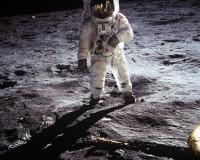
In a period of less than a month, everything good seemed possible for America. First came the Moon landing, on July 20, 1969. Billions watched our astronauts live from the lunar surface and took pride in humanity’s achievement. In the United States, the concept of collective will to conquer a huge national challenge got a big boost. Project Apollo joined the Manhattan Project as paradigms of government-led Yankee ingenuity licking a technological problem — and on a tight timetable to boot, expenses be damned because of the extreme nature of the threat.
By Stephen R. Dujack
In a period of less than a month, everything good seemed possible for America. First came the Moon landing, on July 20, 1969. Billions watched our astronauts live from the lunar surface and took pride in humanity’s achievement. In the United States, the concept of collective will to conquer a huge national challenge got a big boost. Project Apollo joined the Manhattan Project as paradigms of government-led Yankee ingenuity licking a technological problem — and on a tight timetable to boot, expenses be damned because of the extreme nature of the threat.