
Vibrant Environment
All
All | Biodiversity | Climate Change and Sustainability | Environmental Justice | Governance and Rule of Law | Land Use and Natural Resources | Oceans and Coasts | Pollution Control
By Siena Fouse, By Lovinia Reynolds
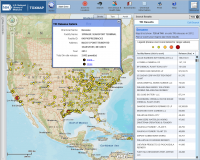
To address environmental inequity, we first need to understand where inequity exists geographically. Maps help model our reality and are a useful tool for locating and addressing environmental inequity. The power of maps in environmental justice was first revealed in 1987 in Toxic Wastes and Race in the United States, published by the Commission on Racial Justice.
By James M. McElfish, Jr., By Jay Austin
On June 4, President Trump signed an Executive Order entitled “Accelerating the Nation’s Economic Recovery from the COVID-19 Emergency by Expediting Infrastructure Investments and Other Activities.” The Order notes that in his March 13 declaration of a national emergency related to the pandemic, the President had invoked “national security” under the National Emergencies Act, 50 U.S.C. 1601 et seq., and “an emergency of nationwide scope” under the Stafford Act, 42 U.S.C. 5191(b).

By Cynthia R. Harris
Pandemics are global in nature, but their impacts are anything but uniform. COVID-19 is exposing substantial inequities, including disproportionate health and economic consequences for minorities. From medical care to broadband, different demographics have vastly different access to critical resources in a widespread crisis. Indian country is especially hard hit by coronavirus. It is the locus where matters of public health, Indigenous sovereignty, and environmental justice collide. Access to clean, safe, and affordable water offers a particularly stark example. Without water, even following the common sense admonition to frequently wash one’s hands becomes an insurmountable challenge.

By Micah Bradley, By Linda Breggin
In his 2019 article, Governing Extinction in the Era of Gene Editing, Prof. Jonas J. Monast of the University of North Carolina School of Law recommends using the Endangered Species Act (ESA) framework to regulate the growing use of gene-editing technology.
By Micah Bradley, By Linda Breggin
In his 2019 article, Governing Extinction in the Era of Gene Editing, Prof. Jonas J. Monast of the University of North Carolina School of Law recommends using the Endangered Species Act (ESA) framework to regulate the growing use of gene-editing technology.
By Micah Bradley, By Linda Breggin
In his 2019 article, Governing Extinction in the Era of Gene Editing, Prof. Jonas J. Monast of the University of North Carolina School of Law recommends using the Endangered Species Act (ESA) framework to regulate the growing use of gene-editing technology.

By ELR Staff
Heralded in 1970 as the nation’s “environmental Magna Carta,” the National Environmental Policy Act’s (NEPA’s) future seems uncertain. As Trump Administration initiatives threaten to diminish and perhaps even dismantle aspects of NEPA, an article in the May issue of ELR—The Environmental Law Reporter chronicles how this merely continues NEPA’s unfortunate trajectory, examining how the courts, the U.S.

By Sasha Koo-Oshima, By Nicholas A. Robinson
Washing hands—repeatedly—is the first line of defense against the COVID-19 virus. Now, more than ever, water is seen an essential element of life.
Although the pandemic indiscriminately attacks rich and poor, old and young, worldwide, it does victimize one out of every four humans disproportionately. These are the 2.2 billion persons who lack clean water. They lack the “luxury” of washing hands, or bathing or drinking clean water.
By Zoe Bertol-Foell
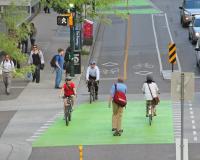
If you have walked across downtown Manhattan recently, you may have been blinded by the new colorful green pavement marking protected bike lanes. NYC is one of many cities flaunting their new bike safety initiatives in political speeches, tourist brochures, and subway ads. Given the multiple economic, health, and environmental benefits of replacing car trips with bike trips, their pride is well-deserved. But in order for such initiatives to serve all New Yorkers, they must go a step further.
By Zoe Bertol-Foell
If you have walked across downtown Manhattan recently, you may have been blinded by the new colorful green pavement marking protected bike lanes. NYC is one of many cities flaunting their new bike safety initiatives in political speeches, tourist brochures, and subway ads. Given the multiple economic, health, and environmental benefits of replacing car trips with bike trips, their pride is well-deserved. But in order for such initiatives to serve all New Yorkers, they must go a step further.