
Vibrant Environment
All
All | Biodiversity | Climate Change and Sustainability | Environmental Justice | Governance and Rule of Law | Land Use and Natural Resources | Oceans and Coasts | Pollution Control
By Nora Moraga-Lewy
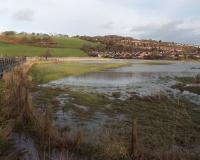
With all the national-level news surrounding the new administration’s approach to environmental protections, it can be easy to lose track of the important roles that state and local governments have in pushing forward plans and policies for environmental protection and resilient communities. Working on ELI and UNC’s floodplain buyouts project and stumbling upon a book from the ELI archives refreshed my excitement and understanding of the various levels on which we can push for environmental action.
By Carol Adaire Jones, By Linda Breggin, By Emmett McKinney
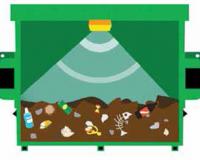
Imagine the dumpsters behind restaurant row in your community signaling their hauling company to come pick them up because they are full and about to overflow, or their food is rotting and about to stink up the neighborhood. Such are the promises for waste management of new “smart technologies,” based on sensors, radio frequency identification (RFID) tags, big data, and social networks.
By Carol Adaire Jones, By Linda Breggin, By Emmett McKinney
Imagine the dumpsters behind restaurant row in your community signaling their hauling company to come pick them up because they are full and about to overflow, or their food is rotting and about to stink up the neighborhood. Such are the promises for waste management of new “smart technologies,” based on sensors, radio frequency identification (RFID) tags, big data, and social networks.
By Carol Adaire Jones, By Linda Breggin, By Emmett McKinney
Imagine the dumpsters behind restaurant row in your community signaling their hauling company to come pick them up because they are full and about to overflow, or their food is rotting and about to stink up the neighborhood. Such are the promises for waste management of new “smart technologies,” based on sensors, radio frequency identification (RFID) tags, big data, and social networks.
By Robert Kelsey
In a series of executive orders, the president has requested that agencies review several environmental protection rules, and if deemed necessary, repeal or modify rules to better facilitate economic growth. One such rule, the Clean Water rule, also known as the Waters of the U.S. rule (WOTUS), has been in the crosshairs of industry for some time.
By Robert Kelsey
In a series of executive orders, the president has requested that agencies review several environmental protection rules, and if deemed necessary, repeal or modify rules to better facilitate economic growth. One such rule, the Clean Water rule, also known as the Waters of the U.S. rule (WOTUS), has been in the crosshairs of industry for some time.

By ELR Staff
When it comes to the global commons, President Donald Trump has made his stance on climate change policy pretty clear. What will be his views on ocean policy? Certainly, given the impact of climate change on ocean acidification, last month’s Executive Order on energy independence was not good news for ocean health. But there are a multitude of marine and coastal issues that the Trump Administration will have to face.
By ELR Staff
When it comes to the global commons, President Donald Trump has made his stance on climate change policy pretty clear. What will be his views on ocean policy? Certainly, given the impact of climate change on ocean acidification, last month’s Executive Order on energy independence was not good news for ocean health. But there are a multitude of marine and coastal issues that the Trump Administration will have to face.
By David Roche
What happens when environmental laws are not enforced? That question is usually reserved for countries that lack sufficient rule of law. In fact, one of ELI’s core missions is to support rule of law all over the world.
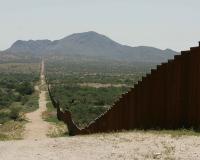
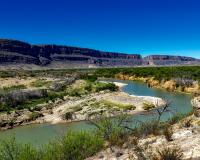
But, in one limited case, the problem hits a little closer to home. The border wall proposed by the Trump Administration would be exempt from most environmental laws.
By Caitlin Meagher
Often lost in discussions of efficacy and payment relating to the proposed U.S.-Mexico border wall is what would happen to the environment if a concrete divider were placed across a nearly-2,000 mile swath of habitat. While wall-like barriers already stand on hundreds of miles of the U.S.-Mexico border, expanding to a full-border wall would constitute a massive transformation of the rest of the United States’ southern borderlands, posing substantial threats to the wildlife that roam the area.