
Research Reports
ELI publishes Research Reports available for free download that present the analysis and conclusions of the policy studies ELI undertakes to improve environmental law and policy. These reports contribute to education of the profession and disseminate diverse points of view and opinions to stimulate a robust and creative exchange of ideas. Those publications, which express opinions of the authors and not necessarily those of the Institute, its Board of Directors, or funding organizations, exemplify ELI’s commitment to dialogue with all sectors.
June 2008
Water resources and infrastructure management have a great deal to do with sustainable development of our communities. ELI and 10,000 Friends of Pennsylvania explore working examples of collaborative municipal and regional approaches to water resources and infrastructure management in a new publication.
Read More >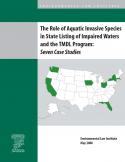
May 2008
ELI’s report, The Role of Aquatic Invasive Species in State Listing of Impaired Waters and the TMDL Program, examines how seven states representing a range of geography, number of aquatic invasive species, water quality standards, 303(d) listings for invasive species, and aquatic invasive species management programs have addressed the effects of aquatic invasive species on the waters of their respective states through the federal Clean Water Act.
Read More >
April 2008
Improving Economic Health and Competitiveness Through Tax Sharing assesses the experience of local governments with schemes that share portions of tax revenues in order to get better development results and avoid sprawl. The report also provides solutions for many of the problems identified in ELI’s Ten Things Wrong with Sprawl, released in 2007.
Read More >
April 2008
A growing number of local governments recognize that changing building practices is important not only for conserving scarce natural resources and preventing pollution, but also for improving health and productivity and achieving economic sustainability. Read More >