
Research Reports
ELI publishes Research Reports available for free download that present the analysis and conclusions of the policy studies ELI undertakes to improve environmental law and policy. These reports contribute to education of the profession and disseminate diverse points of view and opinions to stimulate a robust and creative exchange of ideas. Those publications, which express opinions of the authors and not necessarily those of the Institute, its Board of Directors, or funding organizations, exemplify ELI’s commitment to dialogue with all sectors.
November 2014
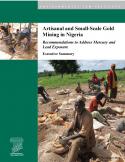
This executive summary introduces ELI’s assessment of legal and policy challenges underpinning the informal artisanal and small-scale gold mining (ASGM) sector in Nigeria. The assessment presents legal, institutional, and financial recommendations designed to improve long-term health and environmental outcomes from the ASGM process. These recommendations are intended to accelerate the formalization of artisanal miners in order to encourage the development and dissemination of best mining practices.
Read More >October 2014
Land-based hydraulic fracturing has been the subject of extensive discussion and debate in recent years. But offshore hydraulic fracturing has received relatively little attention, despite having been used in practice for many years to stimulate wells where production has declined and where there are offshore shale plays. Emerging awareness of offshore hydraulic fracturing has spurred questions about the nature of the practice, how it has been employed, and the framework for managing it.
Read More >
September 2014
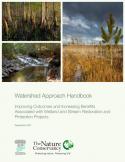
Watershed Approach Handbook: Improving Outcomes and Increasing Benefits Associated with Wetland and Stream Restoration Projects advances the use of a watershed approach in the selection, design and siting of wetland and stream restoration and protection projects, including projects required by compensatory mitigation.
Read More >August 2014
Over the past several weeks, multiple documents related to RESTORE Act have been released by the Treasury Department,
which is tasked with administering the Restoration Trust Fund and overseeing Pots 1 and 5, and the Gulf Coast Ecosystem
Restoration Council, which oversees Pots 2 and 3. The documents are relevant to the administration, distribution of funds,
and proposal of projects and programs under the RESTORE Act. This chart lists them and their associated public
participation opportunities.