

Research Reports
ELI publishes Research Reports available for free download that present the analysis and conclusions of the policy studies ELI undertakes to improve environmental law and policy. These reports contribute to education of the profession and disseminate diverse points of view and opinions to stimulate a robust and creative exchange of ideas. Those publications, which express opinions of the authors and not necessarily those of the Institute, its Board of Directors, or funding organizations, exemplify ELI’s commitment to dialogue with all sectors.
January 2013
ELI has published a guidebook designed to help communities in Liberia develop and implement projects using funds from the National Benefit-Sharing Trust, an entity created by Liberia’s National Forestry Reform Law (NFRL) of 2006. Under the Trust, revenues from the country’s forest sector may be used to help communities develop according to their own priorities. The Trust collects a share of funds from the land rental fees that timber companies must pay the government and sets them aside for communities who are affected by commercial forestry activities.
Read More >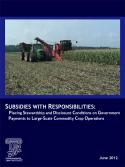
January 2013
This ELI report recommends that large-scale commodity crop operations that opt to receive any form of federal farm subsidy, including subsidized crop insurance, be assigned responsibility for: putting in place basic measures to reduce water pollution from fertilizer runoff; and disclosing information to the public about the quantity, type, and timing of fertilizers they apply. Runoff from the production of major commodity crops such as corn, soybeans, and wheat can contribute significantly to downstream water pollution.
Read More >
October 2012
Radon is a radioactive gas that can accumulate indoors when it enters buildings from the soil and rock below. Indoor exposure to radon is responsible for about 21,000 lung cancer deaths in the United States each year. Fortunately, it is relatively easy to test for radon, and there are well-established techniques for reducing elevated radon levels.
Read More >
October 2012
Radon is the second leading cause of lung cancer and the seventh leading cause of cancer mortality overall. Many states have adopted laws, regulations, and policies that address radon in some fashion, yet stronger measures are needed to accelerate action. Radon in Homes discusses key developments in state policy and highlights opportunities for strengthening policies to reduce risk from indoor radon exposure.
Read More >