
Vibrant Environment
Food Waste Initiative
All | Biodiversity | Climate Change and Sustainability | Environmental Justice | Governance and Rule of Law | Land Use and Natural Resources | Oceans and Coasts | Pollution Control
By Linda Breggin, By Taalin RaoShah
The Environmental Law Institute and NRDC recently released six model resolutions on advancing food waste reduction, complimenting the six existing ELI/NRDC model municipal policies. These new model resolutions provide template language that city councils and other municipal legislative bodies can adopt, in whole or in part, to express support for a range of food waste reduction measures

By Leah Fattor, By Linda Breggin, By Sebastian Duque Rios
Every year, about 45 million gallons of milk go to waste in U.S. schools. At the same time, one-third of the U.S. population is lactose intolerant—meaning one in three children cannot comfortably or safely drink standard cow’s milk.
By Linda Breggin, By Taalin RaoShah, By Leah Fattor
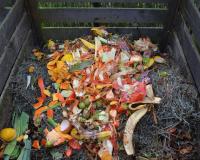
The Environmental Law Institute (ELI), NRDC, and the Institute for Local Self-Reliance (ILSR) recently released a Model Municipal Ordinance on Advancing Community Composting (Model), a template ordinance intended to reduce regulatory barriers to and provide opportunities for community composting.

By Linda Breggin, By Taalin RaoShah, By Jessica Sugarman, By Darby Hoover
NRDC and the Environmental Law Institute (ELI) recently released a Model Municipal Zoning Ordinance on Community Composting, a template ordinance intended to advance community composting by establishing it as a permissible land use under a municipality’s zoning code—thus helping municipalities meet their climate and waste reduction goals while achieving various other co-benefits.

By Linda Breggin, By Sarah Backer, By Taalin RaoShah
ELI recently created the Food Waste Prevention Resource Guide Series for Urban Green Lab, a Nashville-based sustainability NGO, in order to build the capacity of classrooms, households, and workplaces to prevent food waste.

By Linda Breggin, By Jessica Sugarman, By Taalin RaoShah, By Sarah Backer
ELI recently submitted a public comment in response to the U.S. Environmental Protection Agency’s (EPA's) request for input on the Draft National Strategy for Reducing Food Loss and Waste and Recycling Organics (Strategy). The Strategy was developed by EPA, in partnership with the U.S.

By Linda Breggin, By Jessica Sugarman, By Darby Hoover
NRDC and the Environmental Law Institute (ELI) recently released a Model Ordinance Establishing a Pay-As-You-Throw (PAYT) Program for Residential Municipal Solid Waste that can help municipalities reduce the amount of municipal solid waste (MSW) sent to landfills and incinerators and, at the same time, institute more transparent, efficient, and fair pricing for residential waste management.

By Linda Breggin, By Jessica Sugarman, By Darby Hoover
A new Model Executive Order on Municipal Leadership on Food Waste Reduction developed by the Environmental Law Institute (ELI) and Natural Resources Defense Council (NRDC) can help municipalities reduce the amount of food wasted throughout municipal operations, highlight the importance of reducing food waste, and demonstrate food waste reduction measures that businesses and o

By Linda Breggin, By Darby Hoover, By Jessica Sugarman
A new model ordinance on mandatory reporting for large food waste generators, developed by the Environmental Law Institute (ELI) and NRDC, could make it easier for municipalities around the country to collect data on food waste and surplus food generation, increase awareness of the problem of food waste, and ultimately lead to reductions of disposal of food waste in landfills and incinerators.
By Akielly Hu, By Linda Breggin, By Jessica Sugarman, By Darby Hoover
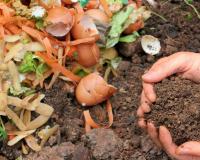
A new model compost procurement policy developed by the Environmental Law Institute and the Natural Resources Defense Council could help municipalities around the country in their efforts to divert food scraps and other organic materials from their landfills and incinerators and, in so doing, realize myriad economic and environmental benefits.