

Vibrant Environment
All
All | Biodiversity | Climate Change and Sustainability | Environmental Justice | Governance and Rule of Law | Land Use and Natural Resources | Oceans and Coasts | Pollution Control
By Jarryd Page
National Environmental Policy Act (NEPA) policy and practice has been in flux in recent months. Between executive orders, the recission of longstanding Council on Environmental Quality (CEQ) implementing regulations, a much-anticipated U.S. Supreme Court decision in Seven County Infrastructure Coalition v. Eagle County, and announcements by several federal agencies rescinding or modifying their own NEPA regulations, it’s worth a brief recap.

By John M. Doherty
What is “gold-standard science?” According to an Executive Order published on May 23 meant to guide federal scientific endeavors, it has several characteristics such as being “collaborative and interdisciplinary,” “communicative of error and uncertainty,” and conducted in a manner that is “without conflicts of interest.” Few could argue against these qualities.
By Linda Breggin, By Taalin RaoShah, By Leah Fattor
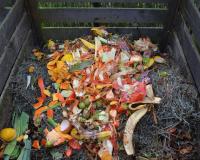
The Environmental Law Institute (ELI), NRDC, and the Institute for Local Self-Reliance (ILSR) recently released a Model Municipal Ordinance on Advancing Community Composting (Model), a template ordinance intended to reduce regulatory barriers to and provide opportunities for community composting.

By Dara Albrecht
On May 28, Germany’s Higher Regional Court of Hamm dismissed a lawsuit brought by a Peruvian farmer, Saúl Luciano Lliuya, against the German energy company RWE AG. The court found that Lliuya had not demonstrated a sufficiently imminent or acute threat to his property to justify legal relief.

By Journey Lipscomb
Global sea levels rose more than expected in 2024, according to a recent scientific review conducted by researchers from the California Institute of Technology, University of Hawaii at Manoa, and the Spain and International Space Science Institute.
By Journey Lipscomb
Global sea levels rose more than expected in 2024, according to a recent scientific review conducted by researchers from the California Institute of Technology, University of Hawaii at Manoa, and the Spain and International Space Science Institute.

By John M. Doherty
The iris is the part of the eye that controls how much light enters into it. In doing so, and through working with the other parts of the eye, it helps us to see and navigate the world around us.

By James M. McElfish, Jr.
In a series of separate Executive Orders, administrative memoranda, and Federal Register notices, the Trump Administration has substantially curtailed the role of public comment in federal governmental decisions. Public notice and comment have improved government decisions—not treating government agencies as smarter than the public. Exclusion of public comment from both environmental reviews and rulemaking will undermine this important value.
Governmental Actions and Project Decisions

Part 2: The Impending Battle Over the Endangerment Finding
By Bob Sussman
Bob Sussman was Deputy Administrator of EPA during 1993-1994 and Senior Policy Counsel to the Administrator during 2009-2013.
Climate Science on Trial

Part 1: The Purge of Climate from All Federal Programs
By Bob Sussman
Bob Sussman was Deputy Administrator of EPA during 1993-1994 and Senior Policy Counsel to the Administrator during 2009-2013.