
Research Reports
ELI publishes Research Reports available for free download that present the analysis and conclusions of the policy studies ELI undertakes to improve environmental law and policy. These reports contribute to education of the profession and disseminate diverse points of view and opinions to stimulate a robust and creative exchange of ideas. Those publications, which express opinions of the authors and not necessarily those of the Institute, its Board of Directors, or funding organizations, exemplify ELI’s commitment to dialogue with all sectors.
October 2005
Securing the Promise of Nanotechnology: Is U.S. Environmental Law Up To the Job? summarizes the output of a multi-stakeholder dialogue hosted by ELI and the Woodrow Wilson International Center for Scholars, held earlier this year. The Dialogue brought together noted scientists, lawyers, and policymakers to examine how US laws and regulations, as well as additional means of governance such as voluntary programs and industry standards, can be used effectively to address the environmental, health, and safety implications of nanotechnologies.
Read More >
August 2005
This report discusses selected legal issues in IAQ-related claims brought against public school entities by parents or school staff. The report focuses on claims in three areas of the law: (1) state workers’ compensation systems, (2) common law tort, and (3) federal disability rights/non-discrimination statutes.
Read More >
May 2005
This report, co-produced with Resources for the Future, introduces for the first time a framework that can be used to plan for the types of activities and associated costs required to implement successfully institutional controls (ICs). Institutional controls are used at contaminated sites that are cleaned up to standards based on the assumption that they will be used in ways that will avoid exposing people to hazardous substances that remain in buried soils or groundwater.
Read More >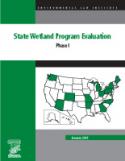
January 2005
This study seeks to analyze seven core areas of state wetland programs, including regulatory programs, water quality standards, monitoring and assessment programs, restoration projects and initiatives, public/private partnerships, education and outreach, and coordination with state and federal agencies. Twelve states are examined in Phase I of the study, which will eventually expand to cover all 50 states.
Read More >
December 2004
While nations and multinational corporations profit from mining operations around the world, local communities face the resulting negative impacts. Mining communities have begun to exercise their right to prior informed consent to mining operations, despite skepticism in the international community and business world. However, in December 2003, the World Bank's Extractive Industries Review endorsed prior informed consent for its projects and private projects.
Read More >